
Lab Twin Screw Extruders: Small Scale, Big Results with DW5210B
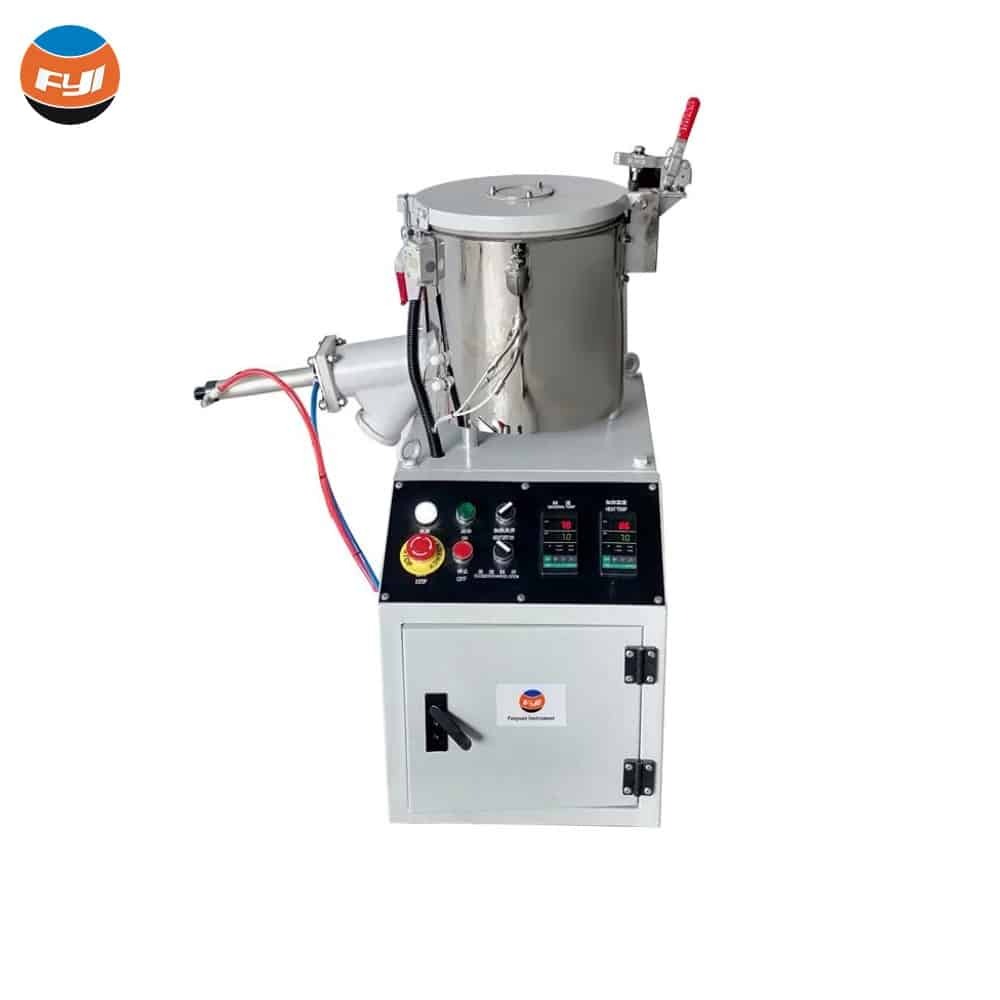
In laboratories around the world, innovation depends on precision equipment that can handle diverse materials and complex processes. A lab twin screw extruder is one such tool, enabling researchers to perform experiments, test new formulations, and develop innovative materials efficiently.
The DW5210B Lab Twin Screw Extruder is engineered for small-scale experiments with big impact, offering advanced features for scientists and engineers who need accuracy, reliability, and versatility in one compact system.
Why Lab Twin Screw Extruders Are Essential
While industrial extruders focus on mass production, lab twin screw extruders are designed for experimentation and development. They provide the control and flexibility required to explore material properties without committing large quantities of raw materials.
Key advantages include:
- Precise material handling: Ensures consistent results even with small sample sizes.
- Rapid experimentation: Enables multiple tests in a short time frame.
- Controlled conditions: Temperature, shear, and pressure can be finely adjusted for sensitive materials.
The DW5210B’s user-friendly interface and modular design allow researchers to perform experiments with minimal setup and maximum control.
Optimizing Small-Scale Research with DW5210B
Lab twin screw extruders like DW5210B are built to maximize efficiency and experimentation possibilities:
- Experimentation with Complex Formulations
- Researchers can test multiple material blends simultaneously.
- Enables creation of customized compounds, from polymers to biocomposites.
- Small-scale output allows testing without wasting raw materials.
- Controlled Shear and Thermal Processing
- Adjust screw speed to control shear for sensitive materials.
- Fine temperature zones protect heat-sensitive polymers or chemicals.
- Achieve reproducible experimental outcomes.
- Flexible Screw Configuration
- Modular screws allow adjustments for mixing, compounding, or devolatilization.
- Researchers can explore different processing techniques in one machine.
- Reduces the need for multiple extruder models in a lab environment.
With DW5210B, laboratories can explore material behavior under various processing conditions, providing insights that are crucial for innovation.
Applications in Material Research
Lab twin screw extruders are not limited to a single field—they are highly versatile tools for research across multiple industries:
- Polymers and Composites: Test new blends, reinforce materials, or develop biodegradable compounds.
- Pharmaceuticals: Produce experimental granules or drug-loaded pellets with precise dosage and release characteristics.
- Food Science: Develop new snack products, protein-enriched extrudates, or functional ingredients.
- Chemical R&D: Conduct small-scale reactive extrusion experiments for adhesives, resins, and specialty chemicals.
The DW5210B is optimized for these applications, offering precision and repeatability that makes lab results reliable and scalable.
Advantages Over Single Screw Lab Extruders
While single screw extruders are common, lab twin screw extruders like DW5210B offer distinct advantages for research:
- Superior mixing and homogenization: Two intermeshing screws ensure materials blend uniformly.
- Enhanced control of shear and residence time: Critical for chemical reactions and sensitive polymers.
- Ability to handle complex formulations: Can process blends that may not extrude properly in single screw systems.
- Better scalability: Results from small-scale twin screw extrusion often translate more accurately to industrial production.
This makes the DW5210B ideal for labs focused on R&D, testing, and innovation.
How DW5210B Supports Innovation in Labs
The DW5210B is more than just a tool—it’s a platform for scientific discovery and material innovation.
- Rapid Prototyping: Test new materials quickly and refine formulations efficiently.
- Reduced Waste: Small-scale operation conserves expensive raw materials while allowing multiple trials.
- Safe and Reliable: Advanced controls prevent overheating or excessive shear, protecting both material and operator.
- Data-Driven Research: Consistent output allows accurate measurements of material behavior and performance.
Researchers can explore cutting-edge materials and formulations without the challenges or risks associated with larger industrial extruders.
Tips for Maximizing Lab Extruder Efficiency
- Start with small samples: Allows easy adjustment of parameters without wasting materials.
- Use modular screws strategically: Optimize for mixing, shearing, or conveying based on your experiment.
- Monitor output carefully: Track temperature, torque, and extrusion consistency to improve reproducibility.
- Experiment iteratively: Small-scale extrusion enables rapid testing and refinement of formulations.
Following these best practices ensures that DW5210B delivers optimal performance and meaningful research results.
Conclusion
A lab twin screw extruder is a powerful tool for modern research, enabling scientists and engineers to explore, innovate, and optimize materials efficiently. The DW5210B Twin Screw Extruder exemplifies this capability, offering precision, flexibility, and reliability in a compact lab-scale system.
By leveraging its advanced features, labs can:
- Conduct precise experiments with minimal material waste
- Develop innovative formulations in polymers, chemicals, pharmaceuticals, and food
- Achieve repeatable and scalable results
- Accelerate R&D and innovation cycles
For researchers seeking small-scale, high-impact extrusion, the DW5210B is an indispensable asset, transforming experimentation into tangible results.
FAQs:
Q1: Why are twin screw extruders preferred in lab research over single screw extruders?
A: They provide superior mixing, precise control, and the ability to handle complex material formulations.
Q2: Can DW5210B be used for multiple industries?
A: Yes, it is versatile for polymers, pharmaceuticals, food science, and chemical research.
Q3: How does a lab twin screw extruder reduce waste?
A: By allowing small-scale testing and precise control, it minimizes material usage while enabling multiple trials.