
Smart Delays, Smart Runs: Timing Your Moves in Competitive Online Ludo
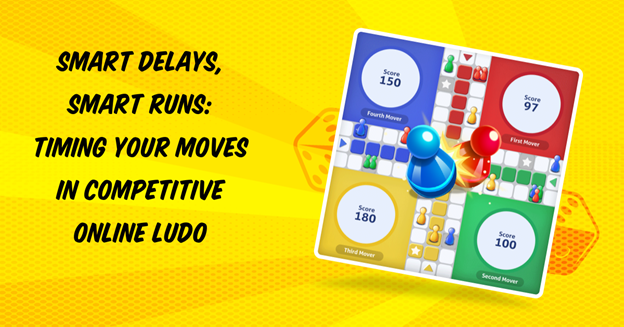
Ludo is also considered a game of luck, but experience reveals that in Ludo, being timely in making decisions is very essential, even more so than in a game of luck. Each move in Ludo is of great importance, particularly in a multiplayer game. In a multiplayer game, a person’s move may alter the entire situation in an instant. In a Ludo game, online or physical, the turning point is to decide on which move to make.
Timing is not only about reacting fast – it is about doing the right thing at the right time. The smaller choices that a player has to make are often the ones that will magnify over time and give the opponent an advantage if it goes the wrong way for that player’s game.
Understanding the Power of Delays
It might sound a bit out of place to delay a move when there is the urge to bring home all tokens as fast as possible. In competitive Ludo, however, waiting strategically often avails better opportunities.
What delays reveal:
- Opponents’ tendencies: The patience allows you to see a pattern of risk versus caution in their betting.
- Board openings: A token held in reserve for a while may dodge an early cut and enable a safer path in a later stage.
- Tactical settings: Intelligent delays allow the positioning of your pieces to block opponents or prepare for a surprise capture.
How to efficiently use delays:
- Hold tokens at safe squares to lure overly aggressive opponents into overextending.
- Delay introducing new tokens when the board is congested to minimize the chances of getting cuts.
Pause a token when advancing would provoke many opponent moves against you. In short, a brief pause is seldom ever a waste but a tool of strategy through which patience gets transformed into control.
Timing Runs: Knowing When to Push Forward
Just as the power of delay is considerable, the time to sprint the token home is also very important. A well-timed push can literally drive the opponents away and gain you key space on the board.
Signs it’s time to run:
The players’ attention may be diverted by the presence of their opponents’ tokens on
Safe routes are available and offer less chances for being returned.
Rolling dice facilitate movement ahead and result in high-probability captures.
Tactical Tips for Running Tokens:
- Notice spacing of tokens: Shift your token that exerts most pressure on others without affecting your safety.
- Mix runs with threats: Move a token forward and keep another close to your opponents.
- Use runs to manage lanes: A well-placed fast moving token can lead to forcing slower play by your opponents.
Timing your runs well multiplies the chances for multiple point scores in a short time, and it might be hard for other players to deal with such momentum.
Reading opponents through timing” means that Timing isn’t just about your play, but also about understanding what other players are deciding.” In games involving several players, “the timing of other players’ actions can give away their habits and intentions.”
Key patterns to watch:
- Deliberate Pauses : This could reflect the thoughts and hesitation of
- Rapid movement: Tend to display signs of frustration and make mistakes. Alternating strategies: Sometimes, an evaluation of the position is made after each fast or slow move.
- Canterbury-Mason Strategy: This evaluates Through the observation of these patterns, one can adjust one’s own timing accordingly in order to capitalize on opportunities and dictate the pace of play.
Reading Opponents Through Timing
Timing is not only about your moves—it’s also about interpreting others’ decisions. In multiplayer games, opponents’ pacing can reveal tendencies and intentions.
Key patterns to watch:
- Deliberate pauses: May indicate cautious, risk-averse players.
- Rapid moves: Often show impatience or panic, creating predictable errors.
- Alternating strategies: Switching between fast and slow moves can signal indecision or tactical play.
By recognizing these behaviors, you can adjust your own timing to exploit openings and control the flow of the match.
Combining Delays and Runs
The most effective Ludo strategy comes from balancing delays with well-timed runs. Neither approach works in isolation: waiting too long leads to lost opportunities, while rushing without caution increases vulnerability.
How to strategically combine these:
- Delay Early: Keep tokens in your pocket until the initial bedlam dies down, and you can gauge the opponents’ moves.
- Selective Push: Move tokens forward when paths are safest and cutting opponents’ chances are most possible.
- Adapt Constantly: Whether to delay or run depends on changing board dynamics.
By following this approach, you’re strategic and future-focused like a Ludo King. Every move you make serves a tactical purpose, allowing you to control the pace of the game rather than simply reacting to it.
The Psychology Behind Timing Decisions
Timing also interacts with player psychology. Awareness of emotional tendencies—fear, greed, or panic—can influence whether a token should be held or advanced.
- Fearful players often wait excessively, creating opportunities to control tempo.
- Greedy players push tokens aggressively, which can be exploited through well-timed captures.
- Panicked players make impulsive moves; delaying your token can provoke mistakes and open clear paths.
Recognizing these patterns enhances your ability to leverage timing for maximum advantage.
Conclusion
Winning in competitive online Ludo is less about luck and more about smart decisions made at the right moment. By mastering strategic delays, timed runs, and careful observation of opponents, you gain control over the game’s flow.
Whether playing casually, practicing with friends, or navigating multiplayer games, these timing strategies ensure that every move, no matter how small, contributes meaningfully to your progress.
In the world of Ludo, it’s not just the dice that determine victory—it’s how, when, and why you move that shapes the outcome.